Following Up, and Following Through, for Lake Tahoe
Op-ed as published in the Tahoe Mountain News, April 19, 2026.
This summer will be the first in over 50 years without lead cables in the waters of Lake Tahoe.
The removal of over 6 miles of legacy infrastructure proved that tangible environmental change is possible. Our community will forever appreciate this accomplishment, and what it means for future generations. We’re grateful to AT&T for upholding its commitment to execute this important work, especially since they didn’t have to.
We can also be appreciative and not overlook how the work was ultimately executed. There is plenty to be learned from the 5 year road to removal and questions that remain unanswered.
After all - the outcome here was always obvious. Lake Tahoe is no place for lead. The cables were decommissioned in the 1980s. Why did it take so long to get the job done?
We started the Tahoe Lead Removal Project to address the lack of urgency regarding a profound risk. We emerged in 2023 after AT&T withdrew from its initial legal commitment. For years we had watched that lawsuit contort the path forward. Key deadlines were missed, but extensions were always granted and the volume of lawyers on both sides increased. A Wall Street Journal investigation transformed this into a nationwide issue, providing impetus for further delay.
Rather than accept the situation, we saw a path to deliver the right outcome through a community-driven project. As someone fortunate to spend many summers in Lake Tahoe, and grew up swimming by the cables, I was eager to organize these efforts. The support was immediate from the public to 3rd party partners and agencies. Within 10 months we proved the power of our approach by securing the first of seven required authorizations.
Within days of that big moment AT&T reversed course, entered a new consent decree, and mobilized teams. After years of waiting, the actual marine construction work was executed in just 17 days. A wave of media pieces ranging from the USA Today to Smithsonian Magazine declared the lead cables “out of the water”. The League to Save Lake Tahoe characterized them as “successfully removed” and championed work “behind the scenes”.
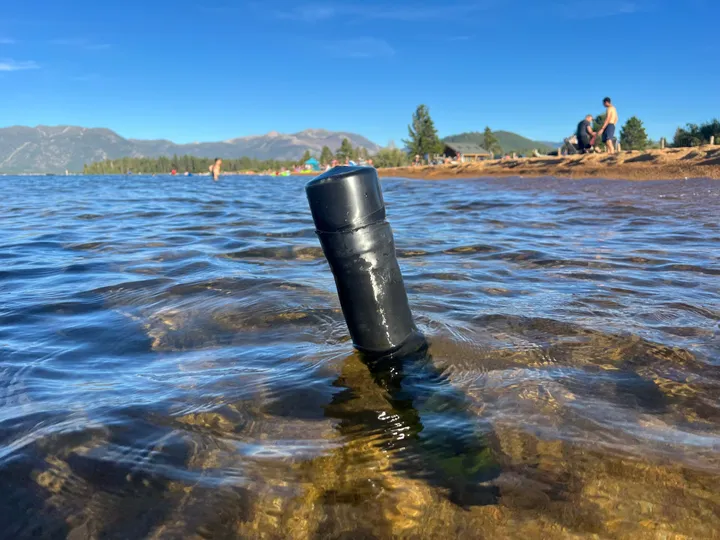
But our community had learned to focus on the frontlines, not the headlines. Articles and FAQs made references to a remaining segment in Baldwin Beach. We stayed action oriented, and contracted a utility locating firm to confirm. When we arrived, we didn’t need their ground penetrating radar - the lead cable was sitting in the water for all to see.
We shared pictures with the agencies and media. In September 2025, AT&T contractors performed additional removal on Baldwin Beach. After our organizers were denied access and misled about when work would occur, we followed up with the U.S. Forest Service and League to Save Lake Tahoe. While both were onsite, they directed us to ask AT&T our questions.
In December, the Tahoe Lead Removal Project submitted its final report to the seven government agencies. Our due diligence over the preceding years exposed two key findings, both future risks to Lake Tahoe.
The first finding was non-profit lobbying. For years, AT&T donated to local non-profits including the League to Save Lake Tahoe. In reviewing annual reports, we found AT&T in their highest donor bracket of $10,000+ from 2014-2020. We reached out to their Executive Director. How much were the aggregate donations? Did any AT&T executives give directly after 2020? Did the League stand by the work AT&T completed? Across 7 follow ups they refused to answer.
This period coincided with prosperity for the organization. Revenue grew from $1.9mm in 2014 to $5.9mm in 2024. They opened a new $6.9mm headquarters. Non-profits can take corporate donations, but when they are also engaging regulatory agencies on permitting and speaking to the media they should disclose obvious conflicts of interest. This dynamic matters because removal wasn’t carried out with an abundance of caution, but in a manner consistent with the conclusions of AT&T’s paid scientists - that the cables posed no risk.
We proposed a conflict of interest self disclosure policy for all non-profits operating in the Lake Tahoe Basin prior to engaging public officials. This should extend to media engagement as well.
The second finding was legacy leases. The lead cables ran through the waters that required a lease from the California State Lands Commission. But this lease was considered a public benefit, which expired by definition once the cables were no longer in use. Once discovered, it shouldn’t have been AT&T’s choice whether or not to remove, and certainly not when.
We proposed a cross agency review of existing corporate infrastructure leases in Lake Tahoe.
We’ve never blamed AT&T. Corporations are obligated to operate in shareholder interests and uphold fiduciary responsibilities. If provided a path to status quo, we should expect them to walk it. But as they reflect, the accounting will be challenging to accept. The initial consent decree cited $1.5 million as a conservative cost of removal. In the end, AT&T was ordered to pay the opposing lawyers over $1.2 million, before their own legal and removal costs. They would have been better off financially and reputationally by just getting the lead out themselves.
For Lake Tahoe, such a status quo could be even more expensive. If local leaders choose to forge mutually beneficial partnerships with polluters rather than hold them accountable, the lake we love doesn’t stand a chance. Organizations that claim public interest shouldn’t operate “behind the scenes” with impunity. Leases shouldn’t sit unattended to for decades. If this continues, we can expect the unintended consequences to amplify as the money get bigger and incentives outside the basin evolve. Lake Tahoe is a paradise, if we can keep it.
And our community effort proved that we can. We don’t have to sit around and wait. We can lead. We can organize. We can make a difference together. It’s never been easier to get started.
Evan Dreyer was the lead organizer of the Tahoe Lead Removal Project. The project’s final report, including both policy proposals, was submitted to seven government agencies in December 2025 and can be found at tahoelead.com.
